- CA : 1001 Wilshire Blvd, Los Angeles, CA 90017
- NY: 1178 Broadway, 3rd Floor #3067, New York, NY 10001
You sell on different platforms, and your revenue is growing, but your accounting is a mess. Payouts don’t match, your cost of goods sold (COGS) is wrong, and sales tax keeps you up at night because your bookkeeper doesn’t understand ecommerce.
Ledger Labs is the outsourced ecommerce accounting team for online brands making $1M–$20M on Shopify, Amazon, Walmart, and beyond. Led by licensed CPAs and an IRS Enrolled Agent, we’re the accountant for ecommerce businesses that generalists can’t match, a firm of certified accountants, not just bookkeepers.
Happy Clients
Years in industry
Strong team







Many ecommerce brands don't realize their financial records are incorrect until tax time or when they seek funding. Issues like unmatched payouts, incorrect cost of goods sold (COGS), and unexpected sales tax obligations can quietly cost you thousands. Here’s how we can help fix these problems.
Problem: Bank deposits don't match sales reports, and processor fees eat your margins.
Fix: We reconcile platform settlements, splitting payouts into gross sales, fees, refunds, and tax.
Problem: Your P&L shows fake profit because inventory is expensed when purchased, not when sold.
Fix: We carry inventory as an asset and release it to COGS only when a unit actually sells.
Problem: Nexus, marketplace facilitator rules, and filing deadlines keep you up at night.
Fix: We monitor nexus across all 50 states, register you, and file on schedule.
Problem: You don't know which products actually make money after fees and ad spend.
Fix: Per-SKU contribution margins after shipping, platform fees, fulfillment, and ads.
Problem: You can't see cash position, channel profit, or ad ROI in real time.
Fix: Dashboards and a monthly close by the 15th, with channel-level breakouts.
Problem: Your balance sheet is worthless to a lender, and you're one audit from a big liability.
Fix: Clean, documented, audit-ready financials that hold up in diligence.
Problem: Refunds and chargebacks are double-counted or land in the wrong month.
Fix: Refunds tied to original orders; chargebacks tracked separately, by channel.
Problem: You lose 20+ hours a month to bookkeeping and fixing integration issues.
Fix: We take the whole ecommerce accounting function off your plate.


Stop spending 20+ hours a month on bookkeeping. Our outsourced ecommerce accounting services handle the full financial picture, reconciled to the platform, not just the bank, so you can focus on growth.
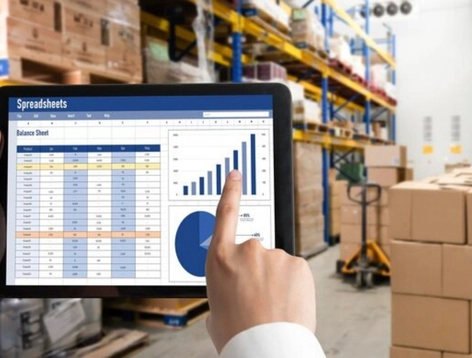
Inventory carried as an asset and released to COGS only when a unit sells, so margins reflect what moved, not what you bought. Shrinkage and write-offs tracked separately.

We reconcile platform settlement reports, not just bank deposits, splitting Amazon payouts into gross sales, referral fees, FBA fees, refunds, and tax, and clearing stranded balances monthly.

Revenue recorded when the order ships, not when cash lands, with pre-orders, subscriptions, and gift cards deferred until earned.

Stripe, PayPal, Shopify Payments, and marketplace fees booked as expenses, not netted from revenue, so you see true sales and true processing cost.

Refunds tied to original orders and dates; chargebacks tracked separately with representment outcomes, so returns don't distort the wrong month.

Nexus monitored across all 50 states, platforms configured to collect correctly, and returns filed on schedule.

Contribution margin per product after shipping, platform fees, fulfillment, and ad costs, so you know what to grow, reprice, or cut.

Supplier bills, 3PL invoices, and inventory POs entered and approved against your cash position, so you don't commit to deposits you can't afford.

Payroll assigned to the right departments and 1099 contractors tracked all year, so January is filing, not sorting.

P&L, balance sheet, and cash flow delivered by the 15th, with channel-level breakouts and a written note on what changed and why.

The same CPA and IRS Enrolled Agent–led team keeps your books and files your return, no handoff, no year-end cleanup, no second firm re-learning your business.

Authored by Gary Jain. Put together by experts at Ledger Labs®
We start by diving into your entire multi-channel setup: Shopify, Amazon, eBay, Stripe, PayPal, and everything in between. As ecommerce specialist accountants, we analyze how revenue moves, how inventory is tracked, and where the numbers stop lining up. We surface what's broken and build a plan to clean it up- no guessing, just a clear roadmap to accurate, scalable financials.
Once the plan is set, we execute, syncing your storefronts with your accounting software, reconciling sales deposits, and mapping refunds, discounts, and inventory movements correctly. We also build systems to stay compliant with multi-state and international tax, plus documentation that stands up under audit, diligence, or platform review.
Where automation makes sense, we use it, syncing sales channels to your accounting platform, building auto-reconciliation workflows, and streamlining tax reporting. We've built automation for fast-scaling Shopify brands, Amazon sellers, and omnichannel operators, so clean data flows without the manual work.
You'll never chase numbers again. We build real-time dashboards tracking cash, margins, ad spend, and SKU-level performance across every channel, so you get clarity without logging into five dashboards.


Ledger Labs consistently delivered high-quality work on time, demonstrating their reliability and commitment to meeting deadlines. Their punctuality in delivering reports and updates helped maintain smooth business operations and strategic planning. Their ability to adapt to changing needs and provide flexible solutions was a standout feature. Whether it was adjusting the scope of work or refining financial processes, Ledger Labs showcased a strong commitment to meeting the evolving needs of the business.


Operations Manager
Allison is a Certified Public Accountant (CPA) and a member of the AICPA. She oversees operations at Ledger Labs, ensuring accurate, compliant financials for hundreds of clients. With experience in both public and private accounting, she builds scalable systems that support fast-growing ecommerce businesses.

Accountant
Matt brings 7+ years of accounting experience across ecommerce, SaaS, and technology. He specializes in financial reporting, month-end close management, and ERP implementations (including NetSuite transitions). Matt ensures our clients get accurate, timely financials they can rely on for growth decisions.
Over 2,000 ecommerce businesses have switched to us from DIY accounting or other ecommerce accounting firms. Here’s the real difference:
| Feature | Generic Bookkeeper | DIY Accounting | Ledger Labs |
|---|---|---|---|
| Platform-Synced Bookkeeping | Manual imports with frequent errors and platform mismatches | You spend 20–30 hours/month downloading CSVs and reconciling | Automated, daily reconciliation across Shopify, Amazon, Stripe, and PayPal, fully mapped to your chart of accounts |
| Accurate COGS & Inventory Tracking | Generic cost assumptions with no inventory reconciliation or per-product visibility | You’re guessing inventory values in spreadsheets | SKU-level COGS tracking with real-time inventory valuation and true landed cost calculation |
| Multi-Channel Financial Consolidation | Disorganized reporting split between systems and spreadsheets | Separate spreadsheets per channel, you’re drowning in data | Clean consolidation across sales channels with unified reporting and seamless data flow |
| Sales Tax Compliance & Filing | Missed thresholds and late filings due to manual oversight or outdated systems | You’ll deal with it when audited (hopefully never) | Nexus monitoring, accurate sales tax mapping, and timely filing across all states and platforms |
| Profitability Reporting & SKU Analysis | Flat P&Ls with no breakdowns or actionable visibility | You know revenue, but not profit by product or channel | Clear dashboards showing profit margins by SKU, channel, ad campaign, and fulfillment method |
| Return & Refund Tracking | Refunds overlooked or double-counted, distorting revenue | Manually tracking refunds in separate spreadsheets | Fully reconciled returns, chargebacks, and partial refunds are reflected accurately in your financials |
| Real-Time Cash Flow Monitoring | Delayed cash flow statements and a lack of forecast accuracy (45-60 days behind) | You're guessing if you can afford that $200K inventory order | Daily insights into cash flow , payouts, liabilities, and working capital across all processors |
| Audit-Ready Financials & Documentation | Vague notes, missing context, and last-minute | "I'll figure it out at tax time" (famous last words) | Well-organized, documented entries with supporting detail for every |
| Ecommerce Specialist Access | Slow turnaround from generalized support teams with limited ecommerce experience | Google searches and Reddit forums are your "advisors." | Slack/email access to your dedicated ecommerce accountant for fast answers and strategic insight |
| Monthly Close Timeline | 30-45 days after month-end (too late to act on data) | Never (or quarterly at best when you remember) | Financial statements delivered by the 15th of every month, guaranteed |
| Monthly Cost | $500-1,000/month (for basic, often inaccurate work) | $0 cash, but 100+ hours of your time/month (worth $10K-20K) | Starting at $1,200/month for comprehensive ecommerce accounting services |
| Setup & Onboarding Time | 8-12 weeks (if they understand ecommerce at all) | Ongoing chaos with no clear system | 2-4 weeks to full platform integration and historical cleanup |
Generic cost assumptions with no inventory reconciliation or per-product visibility
You’re guessing inventory values in spreadsheets
SKU-level COGS tracking with real-time inventory valuation and true landed cost calculation
Daily insights into cash flow , payouts, liabilities, and working capital across all processors

























Find out what our customers are saying about our services.
Our P&L said we were profitable, but the cash never showed up. Turns out our old bookkeeper was expensing inventory when we bought it, not when it sold. Ledger Labs fixed our COGS and inventory accounting, and the real picture was very different. Now I finally know our true margins.
Bianca Fontaine CEOSales tax was my nightmare; I had no idea I'd triggered nexus in eight states until Ledger Labs flagged it. They registered us, set the platforms to collect correctly, and got us filing on time. They caught a liability that could've turned into a five-figure problem at audit.
Devin Ashworth OwnerWe were scaling revenue, but our profit wasn't moving, and I couldn't figure out why. Ledger Labs broke down margin by SKU after fees, shipping, and ad spend, and two of our 'bestsellers' were actually losing money. We cut them, and our bottom line jumped.
Harmony Liang Co-FounderAll major platforms, Amazon (FBA & FBM), Shopify, Walmart, Etsy, eBay, TikTok Shop, BigCommerce, and any channel you sell on. We also integrate with payment processors like Stripe, PayPal, Square, and Shopify Payments.
Our multidimensional experience and wide exposure have been channelized beautifully in these articles!
From saving thousands to scaling fast, these stories highlight how we help businesses grow smarter with real financial strategy and execution.



We use cookies to enhance your experience and analyse traffic. Privacy Policy
Your selection is saved for 1 year.
 | Thank you for Signing Up |



Between Shopify, Amazon, and three payment processors, our deposits never matched our sales. I genuinely didn't know what we'd actually made. Ledger Labs reconciled everything down to the settlement level, splitting out fees, refunds, and tax. For the first time, my books match my stores to the cent.
Colton Reyes Founder